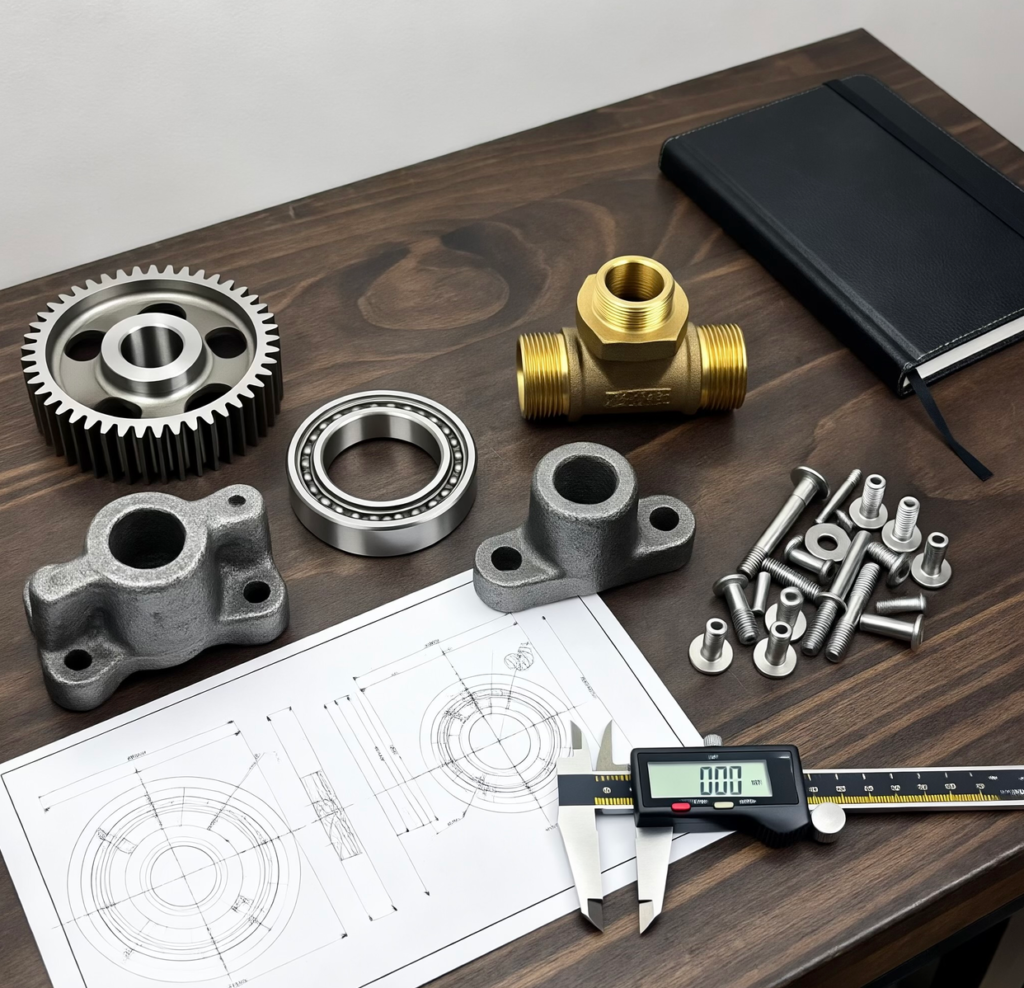
An industrial blog has to cover the parts, materials and processes engineers and buyers research. Deciding which subjects to write about first and how much technical detail to include is challenging work.
At Technical Copy we write blog posts and articles around the questions your customers ask most often. We handle the technical research and any interviews with your engineers, so your team only reviews the finished draft.
Read on to learn more about where to find industrial content marketing ideas and how to put them to use.
What Is Industrial Content Marketing?
Industrial content marketing means publishing pages and articles for the engineers, buyers and plant managers who evaluate your products and services. Readers use each of the five formats below at a different stage of their research, from checking part specs to vetting a supplier’s past projects.
- Product pages: Engineers and purchasing agents use the specs, dimensions and part numbers on these pages to confirm a part fits before they request a quote.
- Service pages: Plating, machining and fabrication companies list their processes, equipment and certifications on these pages so customers know which parts each one accepts.
- Blog posts: Prospects find these posts when they type a question into a search engine, such as how two product types compare.
- Technical articles: An engineer reads these longer pieces to decide whether a process or material meets a project’s requirements.
- Case studies: Buyers look at one customer’s problem, the work your team did and the outcome to judge whether you have handled a job like theirs.
Pull Topics From RFQs, Emails and Sales Calls
Start with recent RFQs and customer emails and copy out every question a buyer asked about your products. Your sales reps and customer service staff answer more questions by phone, so ask them to list the ones they hear most often. Questions that show up in writing and by phone belong at the top of your topic list because more than one buyer has already asked them.
For example, a steel storage rack manufacturer’s sales team might hear the same question every week: Can the racks be bolted to a concrete floor? The company’s marketing team turns it into a blog post titled “How to Anchor Steel Storage Racks to a Concrete Floor.” Each rep now emails that link to the next caller who asks instead of walking through the anchoring steps again.
Find Buyer Questions in Google Search Console
Open the Performance report in Google Search Console and select the Queries tab to see the searches where your site appeared in Google results. You see the past three months of data by default, so widen the date range when only a few queries show up. Copy out the queries phrased as questions and check whether a page on your site already answers each one.
Export the table to a spreadsheet and set those unanswered queries beside the questions you pulled from RFQs, emails and calls. The rack manufacturer might find “how do you assemble steel storage racks” in its report and the same request in customer emails. Topics that turn up in both places move higher on your list because buyers ask about them directly and on Google.
Match Each Question to a Content Format
Pick a format for each question on your list by asking what the buyer will do with the answer. An engineer checking a dimension compares it against a drawing, so the number belongs in the product page’s spec table. Buyers comparing suppliers want proof of past work and get it from a case study about a real customer project.
Five questions a steel storage rack manufacturer might hear appear in the table below with the format for each one. Answer the load rating question in a technical article because explaining how the company tests its racks takes more room than a spec table holds. Link that article from the product page so an engineer who reads the rating number also finds the explanation.
| Buyer Question | Format | What to Include |
| What shelf sizes come with this rack? | Product page | Part number, dimensions and shelf options for each model |
| Do you install the racks? | Service page | Installation steps, service area and how to schedule |
| How does a steel rack compare to a plastic rack? | Blog post | Differences in material, assembly and typical uses |
| What does your load rating mean? | Technical article | How the company tests and states its load ratings |
| Have you supplied racks for a warehouse like ours? | Case study | One customer’s problem, the racks supplied and the result |
Write From Your Team’s Experience
In its guide to AI search features, Google separates commodity content that restates common knowledge from expert or firsthand content. A post titled “7 Tips for First-Time Homebuyers” is Google’s example of commodity content because a writer needs no experience to produce it. Google lists a firsthand point of view as one trait of the original, useful content it expects to do the most for long-term AI search visibility.
Any retailer or blogger could write “5 Tips for Choosing Storage Racks” from common knowledge, so that title is commodity content. The rack manufacturer’s anchoring post draws on the steps its installers use to bolt racks to concrete floors on customer sites. That detail comes from the company’s own installation work, so a retailer that only sells racks has no way to write the same post.
Turn Buyer Questions Into Industrial Content Marketing
Base your industrial content marketing topics on the questions buyers already ask your company. Then match each one to a format and write from firsthand experience.
Technical Copy writes blog posts, articles and case studies for the engineers and purchasing agents in your market. We work from your product data and your engineers’ answers, so every detail matches what your company makes.
Click below for a quote and to learn more about our blog, article and case study writing services.